

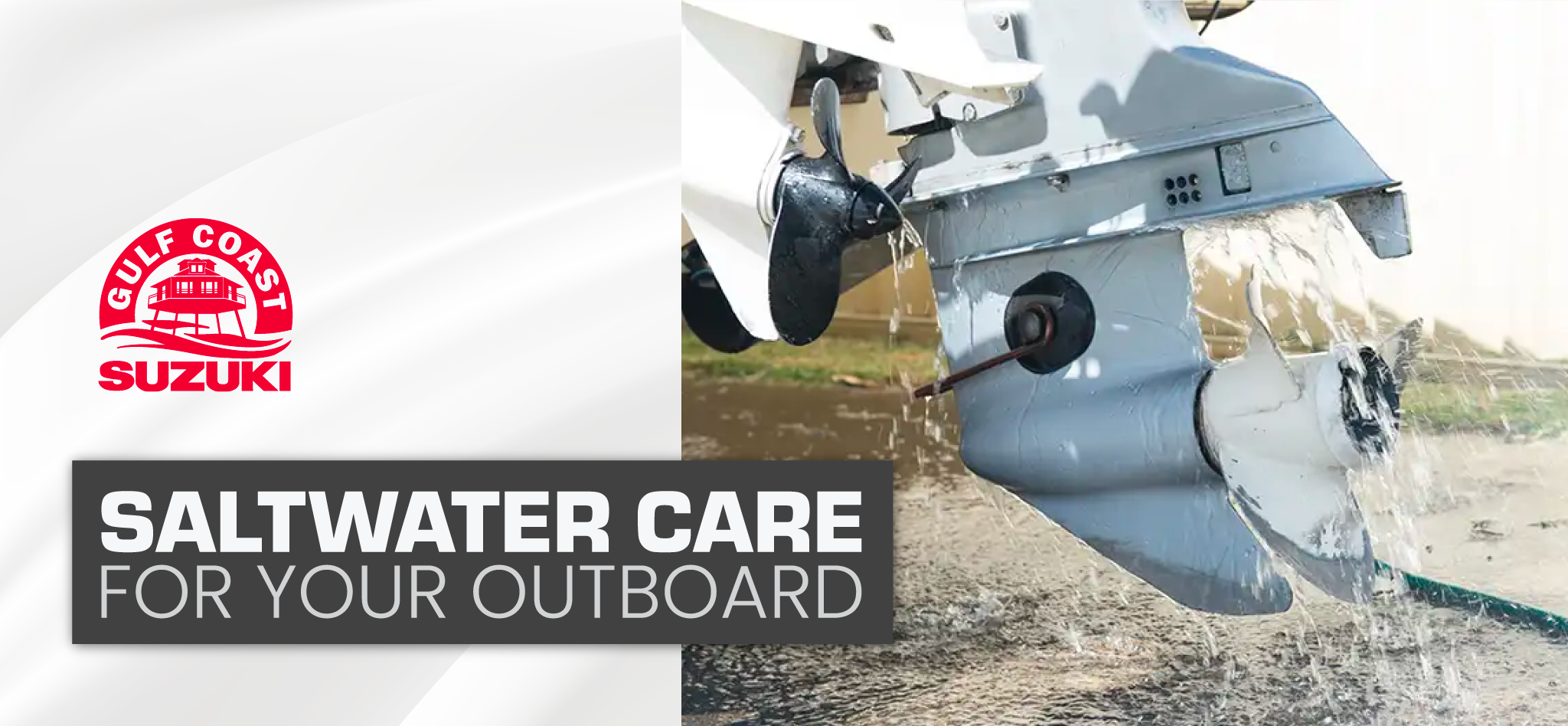
If you run your boat in the gulf or bay, saltwater is just part of the fun. It’s also one of the toughest things your outboard must deal with. Salt speeds up corrosion, eats away at unprotected metal and can quietly damage your cooling system long before you notice a problem. The good news is that most saltwater issues are preventable with a few consistent habits after every trip.
Here’s what matters when it comes to keeping your outboard running strong season after season and trip after trip.
Flush the Engine After Every Trip
This is the single most important thing you can do for your outboard. Salt crystals build up inside the cooling passages every time you run in salt water, and if they’re never rinsed out, they can clog water passages, sensors and the thermostat over time. This kind of buildup is what eventually leads to overheating and expensive repairs.
Most outboards have a flush port that lets you hook up a garden hose without even starting the engine. Run fresh water through for at least 10 to 15 minutes after each run. For older outboards that do not have a built-in flush attachment, a flush bag or ear muffs over the water intakes with the engine running will do the job.
Here’s what matters when it comes to keeping your outboard running strong season after season and trip after trip.
Rinse and Wash the Exterior
Flushing the internals is only half the job. Salt residue on the cowling, midsection and lower unit will degrade the finish and any exposed metal if it’s left to sit. Give the whole outboard a freshwater rinse after every trip and follow up with a mild boat soap when things get grimy or you’ve been handling fish.
Avoid spraying water directly into the air intake, and once the motor is clean and dry, a coat of non-abrasive marine wax on the cowling adds another layer of protection against salt and sun.
Keep an Eye on Sacrificial Anodes
Anodes are small, inexpensive pieces of metal designed to corrode before anything else on your outboard does. They protect your lower unit, trim tabs and other critical components from electrochemical corrosion, but only if they’re doing their job properly.
Check anodes at least once a month, more often if you’re on the water frequently. Once an anode is worn down by about half, it’s time to replace it. Skipping this step means the corrosion that should be happening to a cheap anode starts happening to expensive parts instead.
Grease Fittings and Moving Parts
Saltwater intrusion doesn’t just affect the surfaces you can see. Grease points around the engine need regular attention too, since fully greased components resist saltwater penetration and the corrosion that comes with it. This matters most on the prop shaft, which should be cleaned and regreased any time the propeller comes off for inspection or anode replacement.

How and Where You Store Your Boat Matters
If your boat stays in the water between trips, tilt the motor up so the gear case is completely out of the water when you’re not running it. Marine growth on a submerged gear case isn’t just unsightly. It can cause damage over time.
Direct sunlight is another factor that’s easy to overlook. UV exposure breaks down paint finishes and rubber components, so storing your outboard out of direct sun, or under a UV resistant cover, helps preserve the finish and extend the life of seals and hoses.
Watch the Fuel System
Humid, salty air brings its own set of problems, particularly condensation inside fuel tanks. Water in the fuel system can lead to performance issues and long-term damage. A fuel stabilizer and a water separating fuel filter are good tools for keeping things dry and filters should be checked and replaced using the schedule in your owner’s manual.
Stick to a Service Schedule
Even with great habits, salt water shortens the service life of certain components, particularly water pumps and thermostats. Most manufacturers recommend having these serviced annually or every 200 hours of use, whichever comes first. Regular professional servicing also catches small issues before they turn into bigger, more expensive ones.
Know When It's Time for a Professional Look
A consistent flush-and-rinse routine is a great maintenance tool, but nothing replaces a trained eye checking your outboard on a regular basis. If it’s been a while since your motor has had a proper inspection, or you’re noticing anything that doesn’t feel right on the water, Gulf Coast Suzuki services all makes and models of outboards to keep your outboard running the way it should, no matter what brand you run.
Gulf Coast Suzuki services Suzuki, Yamaha, Mercury and Honda outboards.