
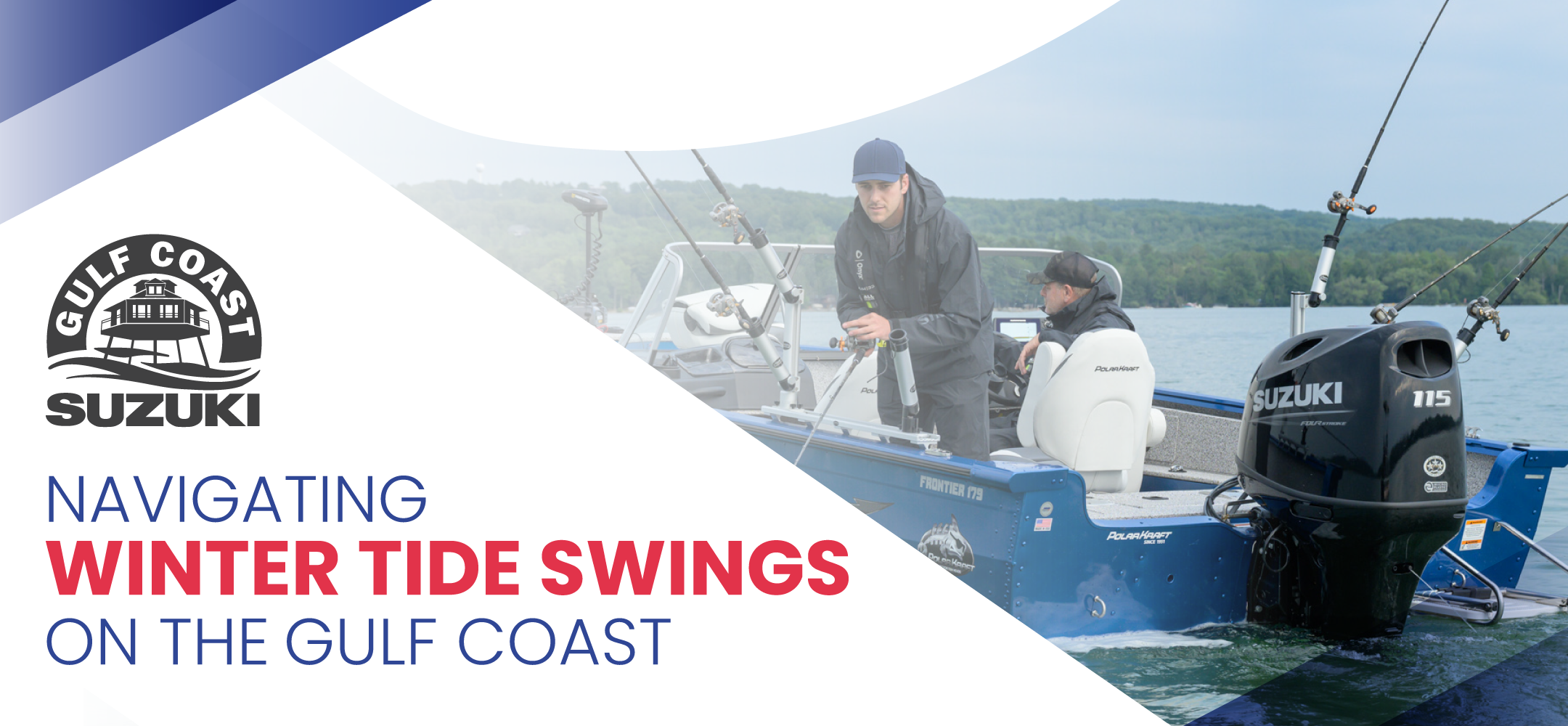
Winter on the Gulf Coast offers some of the year’s best boating: calmer waters, fewer crowds and excellent fishing. But seasonal conditions create a hidden challenge that catches even experienced captains off guard: extreme tidal variations. When cold fronts, low-pressure systems and the moon’s natural cycles align, water levels can drop significantly below normal, turning familiar routes into obstacle courses. Here’s what you need to know to navigate safely this winter.
Understanding Gulf Coast Tides
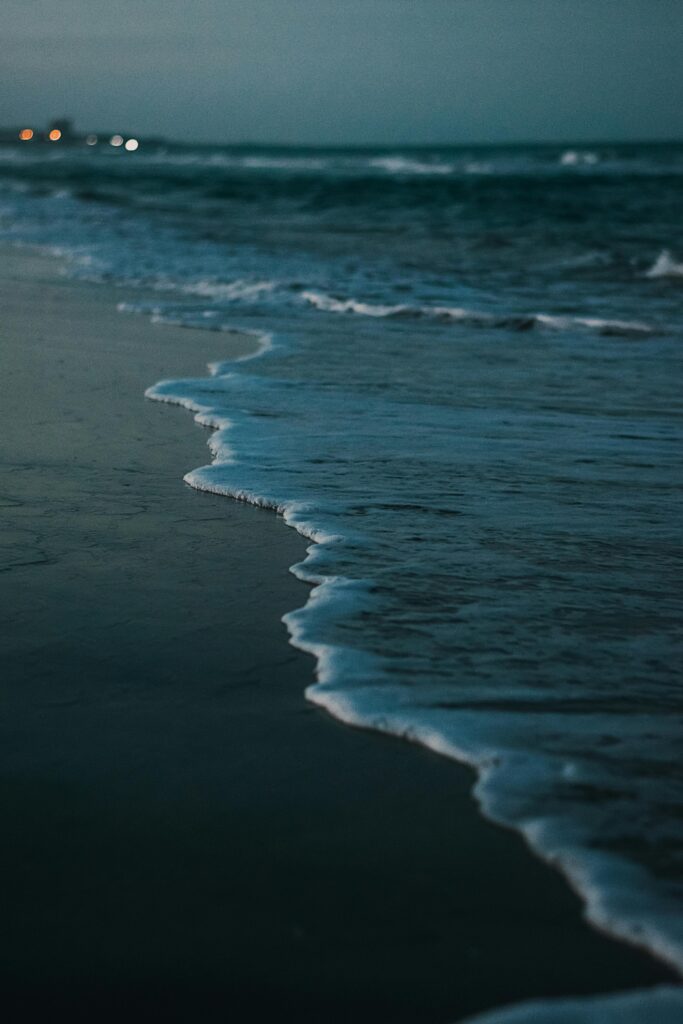
Tidal swings are the regular rise and fall of sea levels, caused primarily by the moon’s gravitational pull, which is more than twice as powerful as the sun’s influence on tides. On the Gulf Coast, we experience diurnal tides (one high and one low per lunar day of 24 hours and 50 minutes), with relatively modest movements of 1-2 feet compared to other coastal regions.
However, tides are more complex than the simple rise and fall of water. The moon’s declination (its position relative to the equator) constantly changes, affecting the differences between morning and afternoon tides. Additionally, twice each month during the new and full moons, we experience spring tides: the highest flood tides and lowest ebb tides of the lunar month. During these periods, when the sun, moon and earth align, tidal forces combine to create more extreme water level variations.
Why Winter Tides Matter on the Gulf Coast
While the Gulf Coast typically experiences modest tidal ranges year-round, winter presents unique challenges. Cold fronts move through more frequently, and when these low-pressure systems coincide with spring tides (the month’s lowest ebb tides), water levels can drop significantly below normal. Low-pressure systems literally pull water away from the coastline, contributing to reduced water levels. Additionally, strong northerly winds common in winter can push water offshore, further reducing depths in bays, channels and launch areas.
These combined factors create unpredictable shallow-water conditions that even experienced boaters may not encounter during other seasons. The challenge is compounded by the fact that local topography plays a crucial role in how tides behave. Shallow bays, narrow channels and gradually sloping bottoms common along the Gulf Coast can amplify the effects of these seasonal variations, making areas that are easily navigable in summer suddenly impassable during winter low tides.
Winter Tide Challenges for Boaters
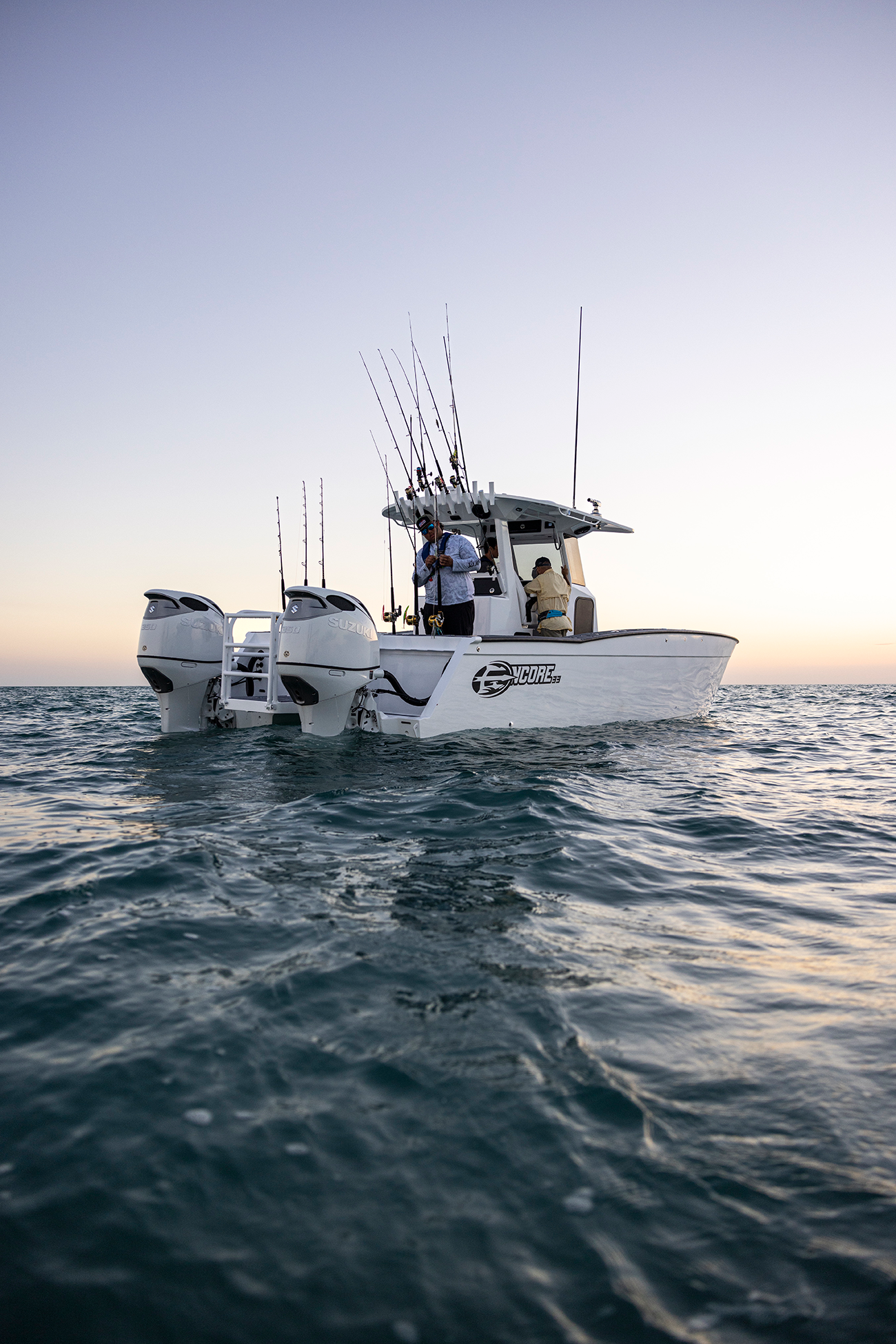
When winter weather patterns combine with extreme tidal cycles, it creates challenges for boaters who are accustomed to navigating the waterways at normal tide levels. Boaters may encounter areas where the water is too shallow for their boats to pass safely. This can lead to grounding, propeller damage or delays in launching boats from the marina due to the water levels being too low to safely launch.
The timing matters, too. Because Gulf Coast tides are diurnal with one high and one low per day, local boaters have a different window of opportunity than boaters in areas with twice-daily tidal cycles. Missing that window during a winter spring tide can mean waiting an entire day for favorable conditions.
How to Navigate Winter Tide Swings
While low tides during the winter months present some challenges, they don’t have to prevent you from enjoying boating on the Gulf Coast. Below are some tips for how to prepare: